Troubleshooting common household appliances can result in reduced repair costs, improved energy efficiency and extended lifespan of your machine. When faced with refrigerator, oven, or washer issues, begin by checking the power supply. Inspect the thermostat settings, check the door seals, and make sure the filter and vents are clean and clog-free. Contact professional appliance services for complex issues to prevent safety hazards, help maintain the warranties and save time with quick and reliable repairs.
- How to Diagnose and Fix Common Appliance Issues?
Nothing is more agonising than a failed oven right when you are preparing a delicious meal for your family. Appliance issues are common in every household and many homeowners attempt to troubleshoot. It helps minimize disruption in daily life. Faulty appliances can be a safety hazard. Seek professional appliance service if the issue is complex. A well-maintained appliance consumes less energy and works efficiently throughout its service life.
| Fast FactAppliance repair is a $6.5 billion industry in the US, with refrigerators as the most commonly repaired and replaced item. |
Here is your basic troubleshooting guide for refrigerator, oven or washer.
- Troubleshooting Refrigerator Issues
If your refrigerator is not cooling properly or there is excessive ice buildup, try the following steps.
- Check the electricity supply.
- Check and readjust the thermostat.
- Make sure the door seals are intact.
- Unblock the defrost vents.
- Clean the condenser coils using a vacuum cleaner.
- Inspect and clean the evaporator/condenser fans.
- Replace the water and air filters every six months for optimal performance.
- Maintain some distance between the wall and the refrigerator and keep away from the heat source.
| Did you know?17% of participants in a refrigerator survey mentioned dispenser issue as the top problem, 13% complained of icemaker, 7% reported ice buildup, 6% mentioned water leaks and 5% cited no cooling issue. |
- Diagnosing Oven Problems
Weak flames or heating elements, unstable temperatures and knob malfunctions are common in ovens and ranges.
- Wipe clean and remove all food debris after every meal prep.
- Use a warm, soapy water solution and carefully clean the burners and oven interior once cooled to remove all food residue and spillage.
- Recalibrate the oven temperature. Using an oven thermometer, find the temperature error and adjust the settings.
- Or remove the knob and adjust to realign with the correct temperature markings.
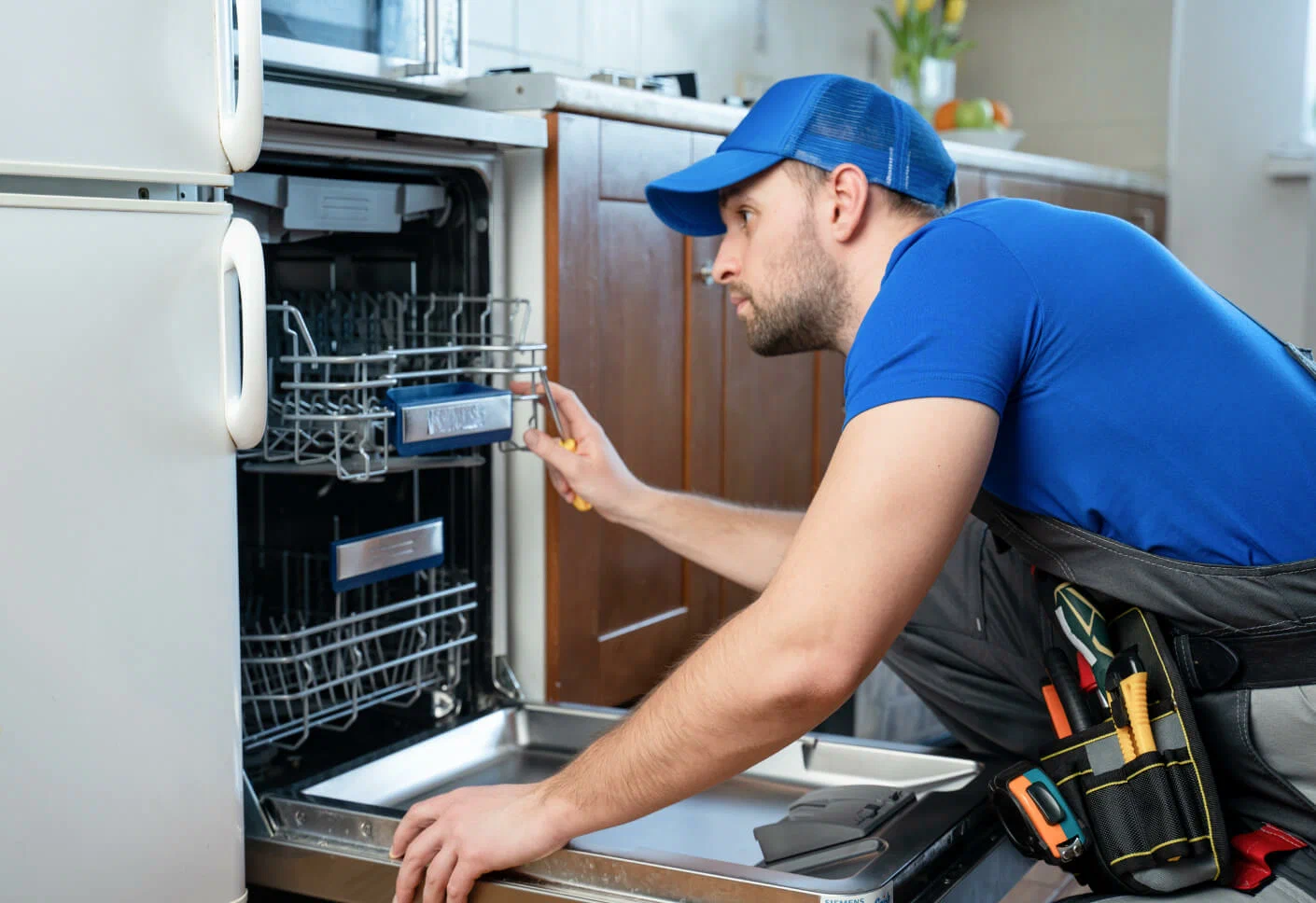
- Resolving Dishwasher Troubles
Leaking, poor drainage, and control panel malfunction are the common dishwasher problems.
- Inspect the plus and chords for any signs of wear.
- Clean the filter and food trap on a regular basis.
- Check the door gasket for any signs of deterioration.
- Check spray nozzles for any signs of clogging.
- Clean the drain pump filter and rinse with warm water and brush to remove debris.
- Inspect the drain hose and the connection to the garbage disposal.
- Fixing Washer and Dryer Complications
Common dryer issues involve low or zero heating and clogged drains.
- Avoid overloading your washer and dryer.
- Wipe dry the door gasket and the machine after every wash.
- Check and clean the lint trap filter.
- Make sure the washer and dryer are on a stable floor.
- Inspect the drain hose and remove clogs to ensure proper drainage.
| Important factYou can prevent mold in your washers by running a hot cycle with baking soda and vinegar every month and dry the door seals and washer completely after every wash. |
- Conclusion
Basic troubleshooting of home appliances can help extend their lifespan, performance efficiency and prevent costly repairs. For complex issues that can not be resolved at home, contact appliance services. Faulty electrical appliances can pose serious safety risks. Professional repair is a quick and convenient way to minimize disruptions and enhance safety, all while maintaining the manufacturer’s warranty on the appliance.
- FAQs
Which appliances break down the most in homes?
Refrigerators, dryers, dishwashers and ovens are the appliances that break down the most.
What are the common dishwasher problems?
Leaking water, poor drainage and control panel issues are common in dishwashers.
How long will my new refrigerator last?
With proper use and maintenance, a refrigerator can last from 10 to 18 years.